
How Unrealistic Beauty Standards Are Harming Gen Z
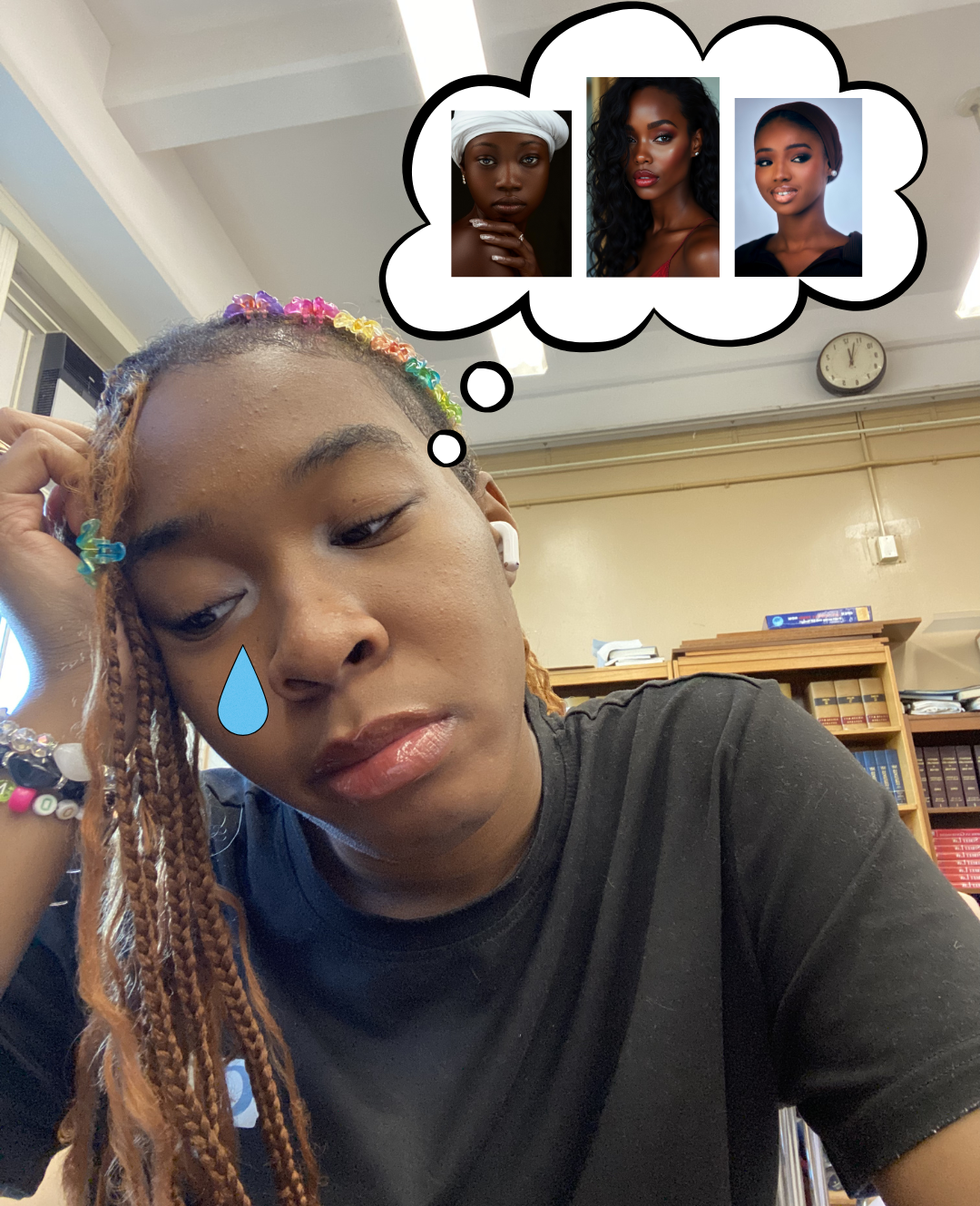
The polished images teens see online create deep insecurities. Photo: Ingrid Beaubrun
By INGRID BEAUBRUN
Have you ever looked in the mirror, wondering “Why can’t I look like her?” or “Why can't I look like him?” Living up to beauty standards has always been a challenge, but now in the age of social media, it feels suffocating.
Daily, as we scroll through our phones, we’re met with a wide variety of people posting makeup tutorials and filtered and edited photos. They’re selling teenagers a lie, making them believe that they need to change this, that, and the third about themselves to become beautiful. But teens don’t always realize that this is all a marketing stunt to boost products or gain publicity.
For instance, I recently came across a video of a fitness influencer on Instagram who was giving out workout tips on how to grow your glutes, but as I scrolled through the comments, I found out she had undergone a “Brazilian butt lift,” so her glutes weren’t even natural.
This is a worldwide problem, but we certainly feel it strongly in the U.S.
“After migrating to America as a pre-teen, my insecurities quickly heightened,” said Edward R. Murrow junior Alisha Gedeon. “I quickly conformed to the no-body hair rule. As I scrolled on social media, they were always promoting smooth, hairless skin. While living in Haiti, I was free, never thinking about such things, but after coming to the U.S., summers were never the same.”
A 2026 study of international high school students by Springer Nature revealed how after six months of living in the U.S., many students reported increased body esteem issues linked to cultural adjustments and social pressure.
“Beauty standards, especially in our generation, are very unrealistic,” said Professional Pathways junior Gracie Wentt. “There's a bunch of different rules on how we should dress, how we should talk, and how we should act. People nowadays all try to look a certain way, abandoning their interests just to satisfy others and fit in a box.”
Sometimes the desire to conform to online beauty standards can go to extremes, such as with bone smashing, popularized by social media influencers like Clavicular. Bone smashing is a dangerous practice where teen boys and men in their twenties repeatedly hit themselves in the face with blunt objects in hopes of changing their bone structure. It shows how more than ever, body image issues are hurting boys as well as girls.
“I’ve gotten insecure about my height to the point where I was thinking of using height boosters,” said sophomore Lensley Jules. “Unrealistic standards and social media is a huge reason why.”
A 2025 study done by Kim Parker at Pew Research revealed that around 43% of teen boys feel pressured to look stronger and 39% feel pressured to look more handsome.
“Teens aren’t struggling with how they look,” said junior Keyshia Nicholes. “They’re struggling with the standards they’re told to live up to.”
The problem with unrealistic standards is the fact that they're never going to go away. If anything they’re getting worse. The only thing that can and should change about ourselves is our mindset — we need to realize that we're all beautiful and different.
“The goal isn't to look like everyone else,” said guidance counselor Ms. Nicole Rodriguez. “The goal is to look like the best version of you.”