
Seniors Share Their Advice on the College Application Process
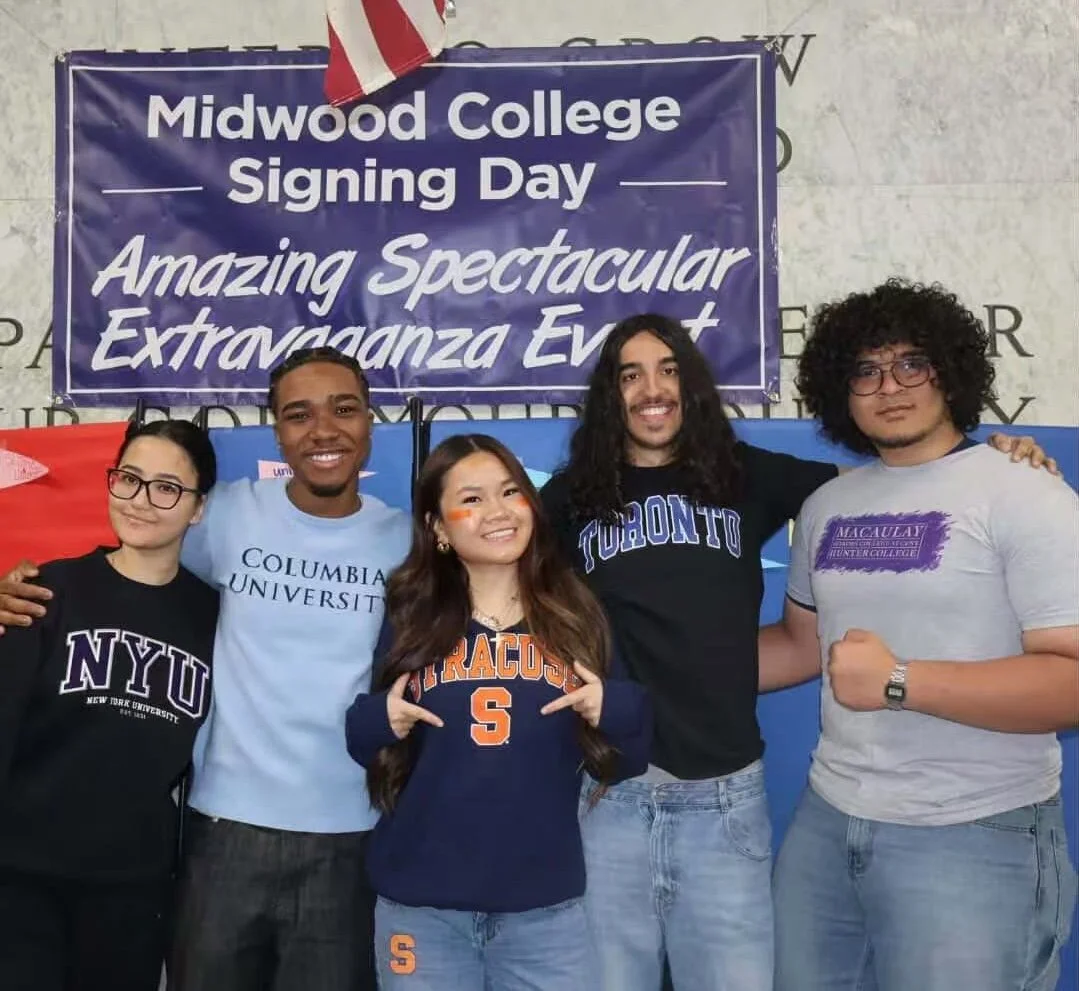
Seniors represent their future schools on Commitment Day. Photo: Ricardo Torres
By AMELIA CRAWFORD and XIAOEN ZENG
As our seniors prepared to spread their wings, the college application process was in full buzz this past fall, filled with looming deadlines, difficult decisions, and plenty of stress. Between late-night essay editing and constant email refreshing, Hornets balanced their excitement for the future with the pressure of actually getting there. But what did the process entail, and what do the rest of us need to prepare for?
Knowing when to start was something that many struggled with, and it was easy to let procrastination take control. When it comes to college applications, it’s better to start sooner than later – as in, during your junior year. Timothy Niedzwiecki said that gave him more clarity and time to think about decisions when the time came.
Something else Hornets had to take into consideration was whether to apply for early action (EA) or early decision (ED). EA is where students can apply to schools earlier than usual to receive their decision more quickly but are not required to attend if they’re accepted. ED is the same process, except if accepted, students are required to attend. Applications for both are due in early fall, usually November 1, and generally yield higher acceptance rates.
Rising seniors should also be checking if they’re qualified for scholarships and special programs such as QuestBridge, and Macaulay Honors for the City University of New York’s public colleges (CUNYs). Information about other programs can be found in the Class of 2027 Google Classroom, or simply ask a college counselor.
QuestBridge is a highly competitive program that connects high-achieving, low-income students with high-tier schools. If a student is matched with a college, they are guaranteed admission and are required to go but also receive exceptional financial aid. For example, Verna Weng committed to Williams College, a liberal arts school with an eight percent acceptance rate, through QuestBridge.
Financial aid to help students pay their tuition can come from the schools themselves or the government. It’s highly recommended to fill out the FAFSA (Free Application for Federal Student Aid) as soon as possible to determine how much you could receive. The FAFSA needs to be completed every year, and applications typically open in October and end in June, but don’t wait unless you want the leftovers.
Whew, that was a lot. Now, what’s needed for the actual application?
“A combination of everything,” said Ms. Saira Camarillo-Gonzalez, a college counselor. “Your GPA, SAT, academic rigor, extracurriculars, and letters of recommendation are all important factors.”
Plus college essays! Figuring out what to write about had many students puzzled, but it’s also what can make or break an application. Jonathan Beauzile, who’s going to Trinity College, said, “The essays were probably the biggest part for me because they were my chance to actually tell my story beyond my stats.”
“I’ve been really involved in things like lacrosse, leadership programs, and advocacy work,” Beauzile said. “That made it easier to write my essay because it was genuine and something I actually care about.”
“I realized colleges wanted to learn who I actually was, not just see perfect grades or activities,” said Sarai Diaz-Mendez, who committed to Brown University and plans to study business.
Boston University-bound Aziza Ziyadulloeva said her essay “took multiple drafts and revisions and more time thinking back into my life, finding what influenced me the most.”
Another commonly asked question is how many schools to apply to.
“Apply, apply, and apply, but do it strategically,” the school mayor, Ricardo Torres, said. “I applied to around 40 schools and got into 32, and what that taught me is that college admissions aren't always predictable.”
Diaz-Mendez applied to a mix of private and public universities, CUNYs, and community colleges because she wanted to keep her options open both financially and academically. CUNYs such as Baruch, Hunter, and Brooklyn College cost only about $7,500 a year.
On top of the basics, some schools have special requirements for their applications. The most common were supplemental essays, where students had to explain why they were interested in that school or a particular program.
Word counts, often with stingy ranges from 150 to 500, posed a major challenge. Kamile Amany, who committed to George Washington University, said, “It was difficult – like so hard – because there was so much that needed to be said and yet many restrictions.”
Navigating the application sites became second nature for many. Common App is a centralized college application platform where students can apply to many schools at once. Edionisa Bunjaku, who’s going to Hunter College, said, “After doing one application, a lot of the information carries over, so it becomes easier to apply to other schools.”
CUNY applications don’t use Common App, but at least they’re all in one place and “really just require the click of a button,” Niedzwiecki said.
A common difficulty amongst our seniors was staying organized and balancing school alongside their applications. Bunjaku said, “Each school had slightly different expectations, especially with supplemental essays, so it was easy to feel overwhelmed if you didn't stay organized.”
Peer comparison can also be stressful. “Seeing applicants with stronger grades or more extensive extracurriculars sometimes made me feel insecure about my own abilities, which took a toll on me mentally,” said Rehaab Baig, who committed to Fordham University for political science.
After submitting applications, the hard part is over, right? Wrong. Picking the right school required heavy deliberation.
Beauzile described committing as “stressful but exciting.” “Visiting schools and talking to people helped a lot, but at the end of the day, I had to trust my gut,” he said. “Committing felt like a huge weight off my shoulders.”
“Manage your expectations and apply to safety schools that suit you,” said Biana Gluzman, who’s headed to Baruch College, the Wall Street Journal’s top selection for best value. “The chances of you getting into your #1 school can be extremely slim depending on where you want to go, so apply to other colleges that you can see yourself having a good time in.”
The class of 2026 left our rising seniors with a few wise words. Alessandria James advised students to stay on top of everything and to not let “senioritis” impact motivation. “Just have fun, and try to participate in everything,” she said. “Be in yearbook photos and make memories until it's time to leave.”
“Your effort and ambition to grow [is what matters],” Weng said. “Wherever you go, what will matter most is what you choose to make of the opportunities you are given.”
“Give yourself options, but make sure each option is something you’d actually be happy with,” said Torres. “That’s what makes the process worth it in the end.”
College applications can be complicated, but if students stay on track, pay attention to deadlines, and focus on things that they truly enjoy the most, they will cross the bridge when they get to it.
“There’s a quote I really like,” Ziyadulloeva said, “‘What is meant for you will reach you, even if it is beneath two mountains.’”
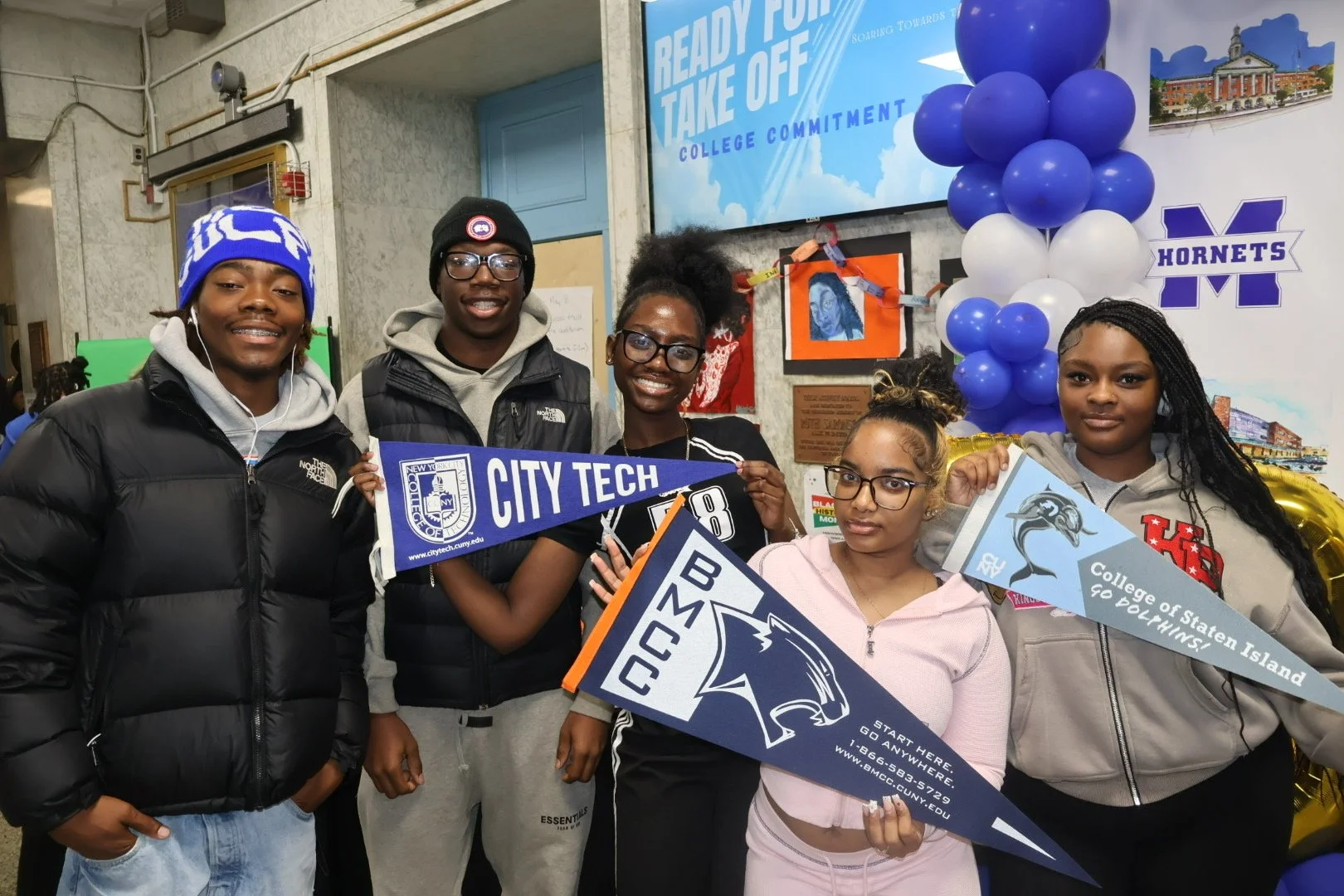
Photo: Ricardo Torres

Photo: Ricardo Torres