
A Taste of Home: Ras Malai
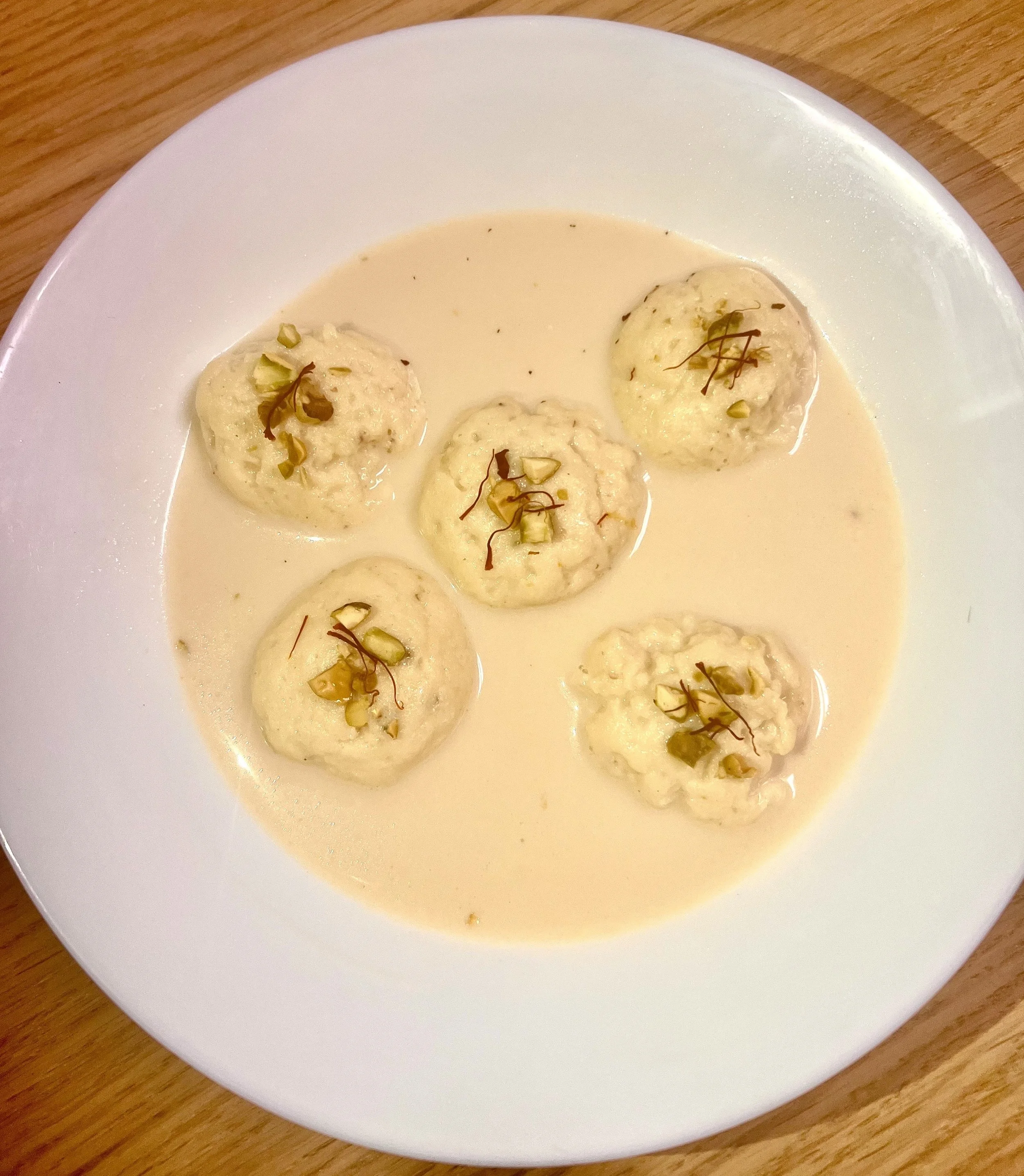
This is the final product: ras malai topped with saffron and pistachios. Image: Zainab Batool
By ZAINAB BATOOL
It’s strange how a simple dish can carry so many memories. For me, ras malai isn't just a sweet, it connects me to my roots, my culture, and my home.
Ras malai is a traditional South Asian dessert, originally from the Bengal region of the Indian subcontinent. After the partition of India, it was brought to Pakistan and became popular at celebrations like Eid and weddings. The word “ras” means sweet flavored milk or syrup, and “malai” means cream. The dish consists of soft, spongy balls made from milk powder that are cooked and then soaked in sweet, creamy milk.
It’s a dish closely connected to celebrations like Eid and family events. I remember sitting with my family, sharing desserts, and enjoying the moment together. Even now, whenever I taste ras malai, it reminds me of those happy times.
“Ras malai is not just a dessert, it is our tradition, and it tastes better when it is made with love,” my mom, Saima Tufail said.
In many South Asian families, recipes are passed down from one generation to another. Even when the ingredients or cooking styles change, the memories connected to the food stay the same. That is why ras malai continues to remain important in our culture.
This time, I tried making some myself at home. I started by mixing milk powder, baking powder, a little flour, eggs, and oil to form a soft dough that I shaped into small smooth balls, which I then cooked in milk until they became light and spongy.
In another pot, I boiled milk slowly until it thickened. I added sugar, cardamom powder, and a pinch of saffron for flavor and kept stirring so it wouldn’t burn, then let it simmer until it became creamy.
Finally, I placed the balls into the warm, sweet milk mixture so they could absorb the flavor and let them rest for 30 minutes so they could soak properly and become even softer. When everything was ready, I placed the ras malai in a bowl and let it chill slightly so the flavors could settle and the texture could become even smoother.
“The best part about ras malai is eating it cold after waiting so long for it to chill,” my cousin Fatima said.
Then I added the final touch on top: a sprinkle of crushed pistachios and a few strands of saffron, which made it look more beautiful and gave it a richer aroma.
“Whenever I smell cardamom and saffron together, it instantly reminds me of Eid,” my sister Manha said.
Seeing the final result made me feel proud, even though it wasn’t perfect. It still felt special because I had made it by myself.
The ras malai was really soft and creamy. The balls soaked up the milk properly, which made every bite full of flavor. The cardamom and saffron gave it a rich taste, while the pistachios on top added a slight crunch.
While making ras malai, I learned that the process is not as easy as it looks. If the milk becomes too hot or the dough is too dry, the balls can break or become hard. Every step requires so much attention and patience.
Sharing the dish with my family made the experience even more enjoyable because everyone was excited to taste it. It’s something I would love to make again, improving as I go, so I can keep the memories going and help carry this tradition forward into the next generation.