
A Taste of Home: Georgian Khinkali
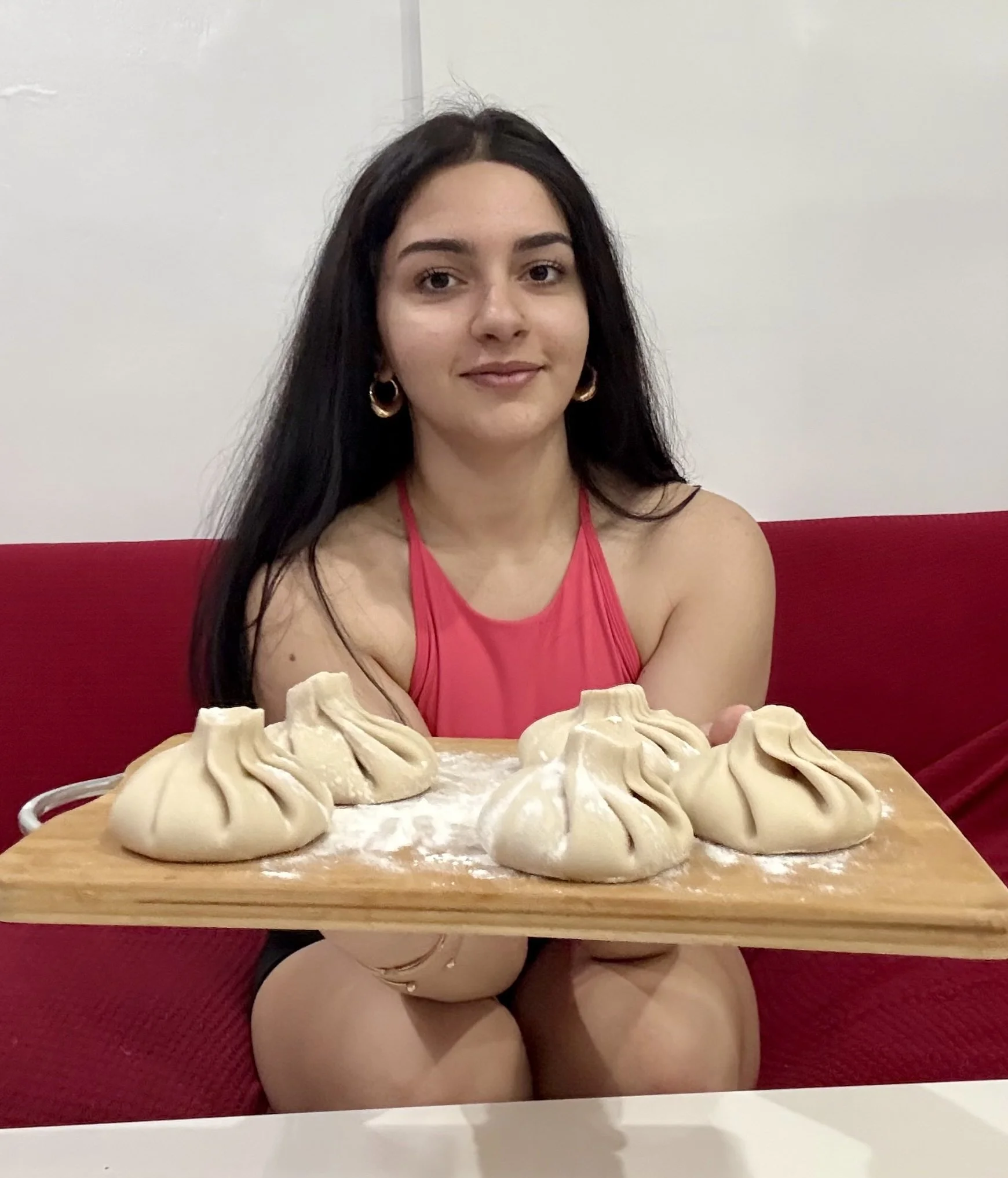
The author presents a plate of homemade khinkali. Photo: Ani Kakhuashvili
By ANI KAKHUASHVILI
The first thing a Georgian will say when they see you eating khinkali is, “Don’t use a fork.” We don’t eat khinkali with a fork because it would cause the delicious savory broth inside to spill out and ruin the experience.
Khinkali originates from the country of Georgia’s mountainous regions Pshavi and Tusheti, where it was created by shepherds as a portable, high-calorie meal.
I have a friend from Tusheti, and every time I visit, their family makes unbelievable khinkali. They are known for making some of the best.
This traditional dumpling is made of a soft dough pocket filled with spiced meat (usually beef and pork or lamb), onions, herbs, and broth. The key feature is that when you bite into it, there is often a juicy soup inside, so you are supposed to eat it carefully.
To eat khinkali, you begin by grabbing it by the thick dough top knot so you don’t break the dumpling. Then you take a small bite from the side and carefully sip the hot broth inside before continuing to eat the rest of the meat and dough. The top knot is usually left uneaten at the end.
Making khinkali is a social tradition in many Georgian families. Everyone gathers around the table to help fold the dumplings, talk, laugh, and spend time together while cooking. In Georgia, khinkali is more than just food, it is something that brings people together.
“The first thing I do when I visit Georgia is eat khinkali,” Anano Kadaria ’27 says. “I just miss it so much.”
There are many Georgian restaurants in Brighton Beach, and one that comes pretty close to the taste of home is Genatsvale. Every day, Georgian immigrants go there tired from work and order food that reminds them of their families, friends, and country.
In an article on Travel Cook Repeat, authors Sarah and Justin say that khinkali simply makes them happy. “[It’s] truly one of our favorite foods,” they write. “Now we cook khinkali on nights when we are happy, nights we are sad, and nights we just crave khinkali.”
Khinkali makes me happy, too. It reminds me of my childhood in Georgia, especially the summers on the western side of the country, where my grandparents live. Even during hot summer evenings, we would still make khinkali and enjoy every second of both the cooking process and eating it afterward.
My mother says, “No matter where we live, when we make khinkali together, it feels like we brought a piece of Georgia into our home.”
The second day after khinkali is made, many people, including myself, like to fry it, which makes it crunchy and even more delicious.
Some people also like to open their khinkali and put vinegar inside. This allows the soup to mix with the vinegar and creates a unique taste that everyone should try at least once in their lives.
My childhood friend Sopi Kimadze has not been to Georgia for five years. She says, “New York has no shortage of Georgian restaurants, but none of them ever really bring me back home. I can sit anywhere in the city and order khinkali, yet it never tastes like my grandmother’s in Georgia.”
My grandmother taught my mother how to make khinkali. Ever since I was little, the recipe my family used has never changed, so every time I bite into it, I travel back to when I was still living in Georgia and my whole family was together.
“Khinkali is made with patience and love,” my grandmother says. “If the family is laughing while making it, the khinkali will always taste better.”