
The Difference Between Cultural Appreciation and Cultural Appropriation
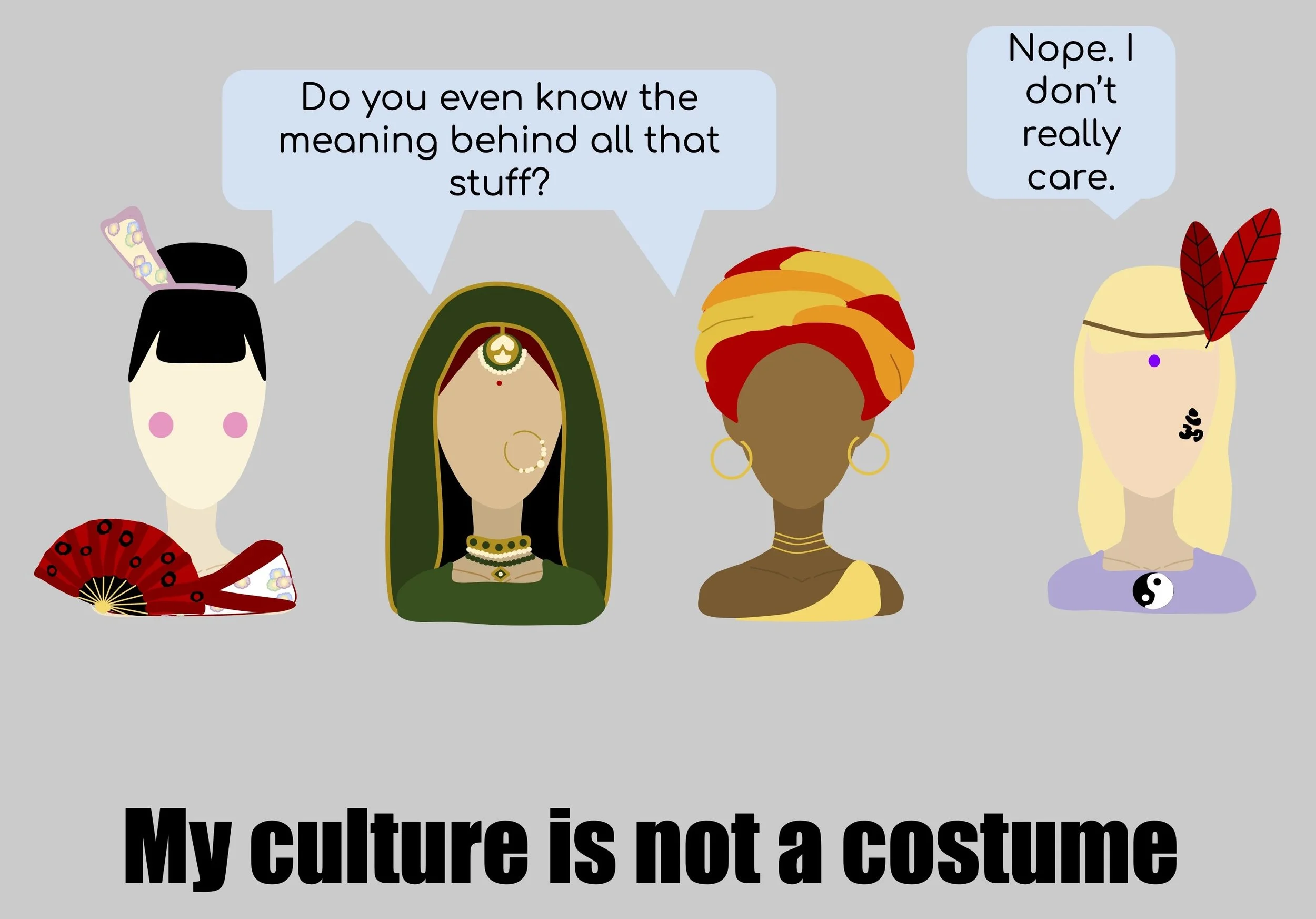
Image: Zara Ahmed
By ZARA AHMED
From TikTok trends to runway fashion, elements of different cultures show up everywhere nowadays. But when traditions that have existed for centuries suddenly become “trendy” without ever crediting the people they come from, it raises the question: Is it cultural appreciation or appropriation?
So what is cultural appropriation, you may ask? Cultural appropriation happens when people, usually of a more dominant culture, adopt or use elements from a minority culture without credit or understanding. This happens especially when the minority culture has faced discrimination in the past. It often involves exploiting traditions, symbols, or fashion for personal gain, which can belittle sacred practices and reinforce stereotypes. This is different from cultural appreciation, which involves learning about, respecting, and acknowledging the culture you’re participating in.
Luxury fashion brands have repeatedly been accused of stealing designs from traditional cultures and selling them for huge profits. For example, Prada faced backlash after releasing sandals that closely resembled traditional Indian Kolhapuri chappals without crediting their cultural origin.
Although it’s okay to take inspiration from other cultures, it’s not right to exploit them and sell them for up to 66 times their original price. The Kolhapuri chappals could cost around $12 in India while luxury versions were sold for about $800. Critics argued that the company profited from designs created by shoemakers who weren’t recognized or compensated for their designs.
“Big brands charge crazy prices for stuff that already existed in other cultures,” said Angel Wu ‘27. “They make money off of it while the original people who made it don’t even get recognition. It just feels unfair when companies profit off of traditions like that.”
Another example of cultural appropriation is when, recently, Margot Robbie, an Australian actress, wore the historic “Taj Mahal” diamond necklace to the premiere of Wuthering Heights, a film. The necklace traces its origins back to the Mughal Empire and was originally associated with Empress Nur Jahan. Yet many headlines focused instead on its connection to Elizabeth Taylor, whose husband gifted it to her for her 40th birthday in 1972.
The controversy grew when reports resurfaced that Punjabi singer Diljit Dosanjh had previously asked to borrow the same necklace from Cartier for the Met Gala but was refused, stating it was “sealed in a museum” and too fragile for loan. Critics felt it was unjust for a Western actress to have easier access to heritage jewelry than the heritage’s own people. This sparked debate about who gets to represent certain cultures on global stages, with many demanding that the necklace be returned to India.
Another well known example is when Katy Perry, an American singer, performed at the 2013 American Music Awards dressed as a geisha, a highly trained Japanese female entertainer. Many people criticized Perry’s performance because it used historic Japanese cultural symbols as a costume. Perry later apologized, saying that she didn’t mean to offend anyone.
Several students have noticed similar examples online, and not just when it comes to fashion.
“I feel like people just copy stuff without even knowing where it came from, and that’s kind of messed up,” said Anna Tang ‘27.
“People will call anything aesthetic on social media but it’s literally part of someone’s culture,” said Angela Chan ‘27.
“People on social media are rebranding cultural foods as TikTok trends and creating new names for it,” said Susanna Wu ‘27. “I think that’s really disrespectful.”
However, this doesn’t mean that Western artists can’t acknowledge and embrace other cultures, or let those in other cultures also celebrate theirs.
“I don’t think people are trying to hate,” said Ellen Chen ‘27. “They just want respect for their culture.”
Not every case of cultural borrowing is harmful. In some cases, celebrities have been wrongfully accused of appropriating a culture and “cancelled” unfairly.
For example, Harry Styles has worn outfits inspired by Indian and African cultures, like kurtas and headwraps. Some people accused him of appropriation, but many fans pointed out that he always credits the designers and explains the items’ cultural significance.
So, what should be done to avoid cultural appropriation? It starts with taking the time to learn where traditions come from, what they mean, and why they matter. It also involves listening to voices from the culture. Giving proper credit, especially on social media, encourages others to learn about that culture accurately.
Speaking up when you see cultural appropriation can also make a difference. Explaining, respectfully, can help others learn and grow from their mistakes. Listening with an open mind shows respect and a willingness to learn.
There are also important things to avoid. Using stereotypes, such as offensive costumes or exaggerated styles, can harm communities and spread misinformation. Similarly, sacred or meaningful cultural items shouldn’t be used casually as fashion or decoration. Exploiting elements of another culture for profit without permission should also be avoided.
Finally, open discussions can give people the chance to learn directly from representatives of other cultures and build meaningful connections.
"People mess up, but what really matters is if they’re willing to learn,” said Jing Yao Zheng ‘27. “At the end of the day, it’s really just about respect.”
As cultural exchange becomes more visible than ever, the responsibility to engage thoughtfully grows alongside it. Understanding the difference between appreciation and appropriation is key to ensuring respect, not harm.