
Gym Class Should Not Be a Requirement
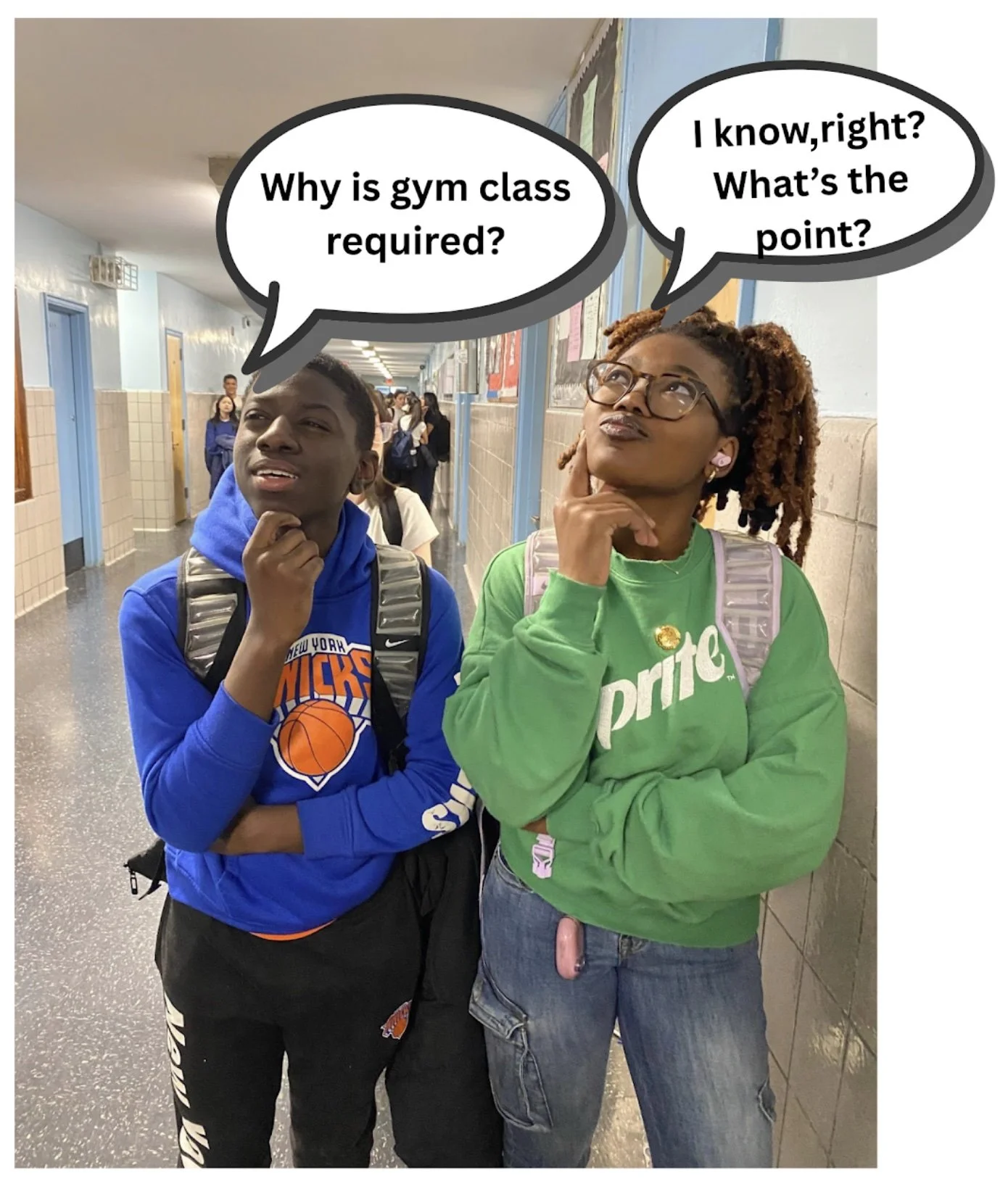
Sophomores Ameilla King and Lensly Jules ponder our key question. Photo: Ingrid Beaubrun
The Midwood Argus is an open forum and welcomes a diversity of student opinion. The views expressed in the paper should not be taken to represent those of the administration, faculty, or the student body as a whole. To submit a letter to the editor, click the button on our homepage.
By INGRID BEAUBRUN
Have you ever walked into the locker room, prepping for gym, wondering, “Why in the world am I taking this class?” That's been the story of my life since ninth grade. From volleyball to basketball to dance, I've always asked myself, “Why do I have to take this class if it's not going to help me in college?”
According to New York state law, it has been mandatory for students in grades K-12 to take a gym class since 1957. High schoolers are required to do 90-180 minutes of gym weekly to earn four gym credits across their four years.
A student's gym class requirement can also be fulfilled if they play a sport. But what about the students who aren't able to spend three hours after school at practice and games?
“Gym classes should definitely be optional,” said sophomore Ameilla King. “If they aren’t required in college, why should they be required in high school, especially if high school is meant to prepare students for college?”
And the craziest part of all this is, although your gym grade isn’t averaged into your transcript, you could somehow still go to summer school for it. How does that even make sense?
“Students should have the option of replacing their gym class with one that benefits them academically, such as a College Now course or an AP class,” said junior Alisha Gedeon from Edward R. Murrow High School.
Many argue that gym is necessary as it encourages students to stay healthy and helps them in the long run with their fitness goals. But states like Arizona, Mississippi, Missouri, and Wyoming don’t require P.E. to graduate, and their obesity rates are similar to other states from their regions. And let's be honest, with about fifteen minutes of gym per day spent in the locker room, about ten minutes of instructional time, and five minutes of teachers having to pause the class because students aren’t paying attention, that only leaves students with fifteen minutes of actual activity, which isn’t enough to go into depth in a hardcore workout.
A typical lesson might see a gym teacher thoroughly explain a workout plan, but transitions and disruptions translate into students sitting on the floor and doing Russian twists for only 30 seconds before it’s time to leave. Couldn’t those 45 minutes in the period be used towards something more productive, such as studying for a test?
“Gym class should be required, as it encourages healthy habits, but there should be conversations on creating more gym class options to bring into the curriculum,” says physical education teacher Mr. Michael Giordano. “It's best for students to get the gym classes they want, as that encourages better participation and allows students to enjoy gym more overall.”
There might be other ways to fix the problem. Instead of forcing students to join sports or take gym, they could go to a local gym to work out in their free time. Maybe schools could fund these local gyms so that students can attend for free.
At the end of the day, if gym doesn't contribute to academic success and fails to provide meaningful physical benefits, then the class should be an option and not a graduation requirement. Students deserve the opportunity to take classes that truly connect with their futures, and schools should have more freedom to give them those choices.