
What Changes Should the NBA Make for Next Season?
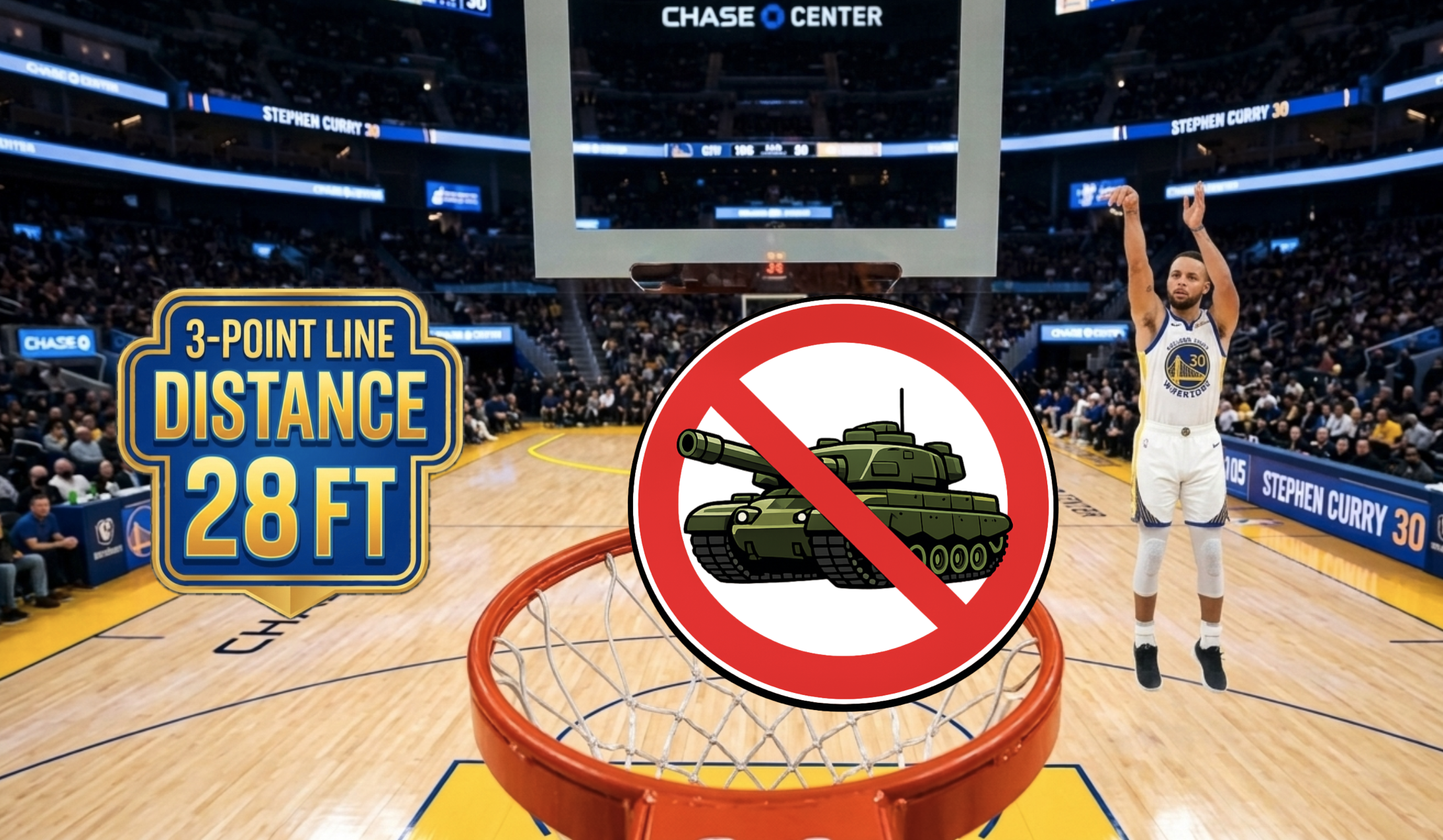
Our writers’ ideas include a fix for tanking and an adjustment to the three-point line. Image: Argus x ChatGPT
THREE FixES FOR Soft Fouls, Award Eligibility, and Tanking
By MARTINO PIERRE
“The NBA just isn’t the same anymore,” your uncle probably said with a Modelo in hand, reminiscing about the ’90s. To an extent, he is right. Over the last 30 or so years, the NBA has evolved substantially. However, not all of this change has been beneficial, and some of our current league rules harm the game's quality.
One of the most common complaints about today’s NBA is how often games are interrupted by soft fouls. While physical contact has always been a part of basketball, many modern calls for minimal contact, offensive “lean-ins,” or exaggerated reactions designed to fool referees. These fouls slow the game, frustrate fans, and discourage players from showing any type of physicality on defense, draining tension from a match-up because, as Varsity Basketball Coach Victor Gjecaj explains, “competitors get physical.” Over-penalizing this kind of play hurts the final product.
The NBA should refine its definition of what constitutes a foul. Rather than calling whistles for very light contact, referees should be instructed to require that it clearly causes a loss of balance or a meaningful scoring disadvantage. If the offensive player’s motion is not significantly affected or contact is heavily dramatized, play should continue. This change would reward disciplined defenders instead of penalizing them for simply being in good position. It would also force stars to look to make a shot instead of looking to draw a foul, making the games more exciting.
The statistics support this. Teams are averaging nearly 24 free throw attempts per game this year, the highest it's been in over a decade, while scoring is at its highest point in more than 50 years. While offense is exciting, constant free throws slow the pace too much and reduce the entertainment factor of live games. With the rise in analytics, teams have basically ‘mastered’ offense; limiting foul calls can help counteract this.
Next, we’ll turn to some behind-the-scenes fixes. Starting in 2023, the NBA introduced a rule requiring players to appear in at least 65 games if they want to be eligible for major awards like Most Valuable Player, Defensive Player of the Year, and the All-NBA Team. The goal was to limit load management and encourage stars to play more games. While the intention is understandable, the rule has significant flaws.
The biggest issue is that it treats all missed games the same. A player who misses time because of a legitimate injury is penalized just as harshly as a player who sits out games when perfectly healthy. This means the league's best can miss out on awards despite clearly performing at an All-NBA or MVP level. A coach should “always proceed with caution when it comes to an injured player,” Mr. Gjecaj said, but the NBA’s current rule does the opposite by pressuring players to prioritize awards and money over their long-term health.
These rules can motivate hurt players to rush back to reach the 65-game quota, only making their injuries worse. Some players have clauses in their contracts that allow them to earn bonuses contingent upon winning awards, and super-max contracts (which are worth significantly more money than regular max contracts) are given based on All-NBA selections. In scenarios like these, players have to choose between losing out on tens of millions of dollars or risking a more serious injury.
NBA players have also criticized the rule, arguing that it values availability over impact. Pacers star guard Tyrese Haliburton went on record calling it “stupid.” The NBA is a player power league, so it should listen to its money makers. Awards are meant to recognize excellence and impact, not just durability.
A better alternative would be a percentage-based system where players are required to play 90% of games, and at least 20 minutes per game, unless they’re missing consecutive games due to injuries verified by independent doctors who have no affiliation to the team.
Some may argue that scrapping the current rule will only reward players who don’t play; however, voters already largely take availability into account. Disregarding shortened seasons, no MVP has played fewer than the current eligibility threshold of 65 games in an MVP season since 1978.
Now for one last issue that’s gotten a lot of attention recently: tanking. Even with the changes to the draft lottery in 2019, being intentionally bad remains a major component of team building in the NBA. Teams with no playoff hopes often rest healthy players late in the season, which leads to blowouts and fans tuning out.
League Commissioner Adam Silver has spoken with urgency about tanking and has said the NBA is exploring a variety of anti-tanking rules, even considering ending the draft. That move would be a mistake, as completely removing the draft would only incentivize star rookies to go to big market teams for more earning potential. Using completely flattened odds (another suggestion) would simply lead to a vastly unfair playing field. The league needs to look in a different direction.
What if the NBA introduced a six-team, single-elimination tournament to decide the No. 1 overall pick? The four worst teams in each conference would qualify, with seeding based on their regular-season records. The tournament would consist of seven total games over three rounds, with the winner earning the top pick.
This system would discourage tanking because teams couldn’t simply bottom out and hope for the ping-pong balls to fall their way; they would have to play competitive basketball to pick number one, with picks 2-14 still being chosen through the lottery.
The NBA Play-In Tournament has already proven that high-stakes games between unlikely contenders can attract fans and attention. A kind of “Draft Tournament” would give fans of struggling teams meaningful basketball to watch instead of intentional losing.
Top draft picks are extremely valuable, especially in the NBA, often shaping franchises for years. Determining the top pick through competition rather than losses better reflects the values of sports while still giving the worst teams a better chance to land a franchise-changing player.
Together, these changes would make the NBA more competitive, more entertaining, and more aligned with what players and fans love about the sport.
HOW TO ADJUST the Three-Point Line, Season Length, and Playoff Seeding
By JONATHAN LI
Ask yourself: When your favorite team jacks up 42 threes, plays an 82-game marathon, and still gets punished for being in the wrong conference, doesn’t it feel like the NBA is daring you to complain? If the league wants to balance competition, protect its stars, and make every game matter again, it should move the three-point line back, reduce the number of games in a season, and eliminate conference divisions.
The first change that should be made is to increase the distance of the three-point line from 23 feet and nine inches to 28 feet from the top of the arc (while keeping the corner three the same). The three-point line was first introduced to make the game more exciting and encourage players to space the floor. According to Basketball Reference, in the 1979-1980 season, teams shot 2.7 3-pointers per 100 possessions on average, and the San Diego Clippers had the highest rate with just 6.5 – about half of what Stephen Curry now attempts by himself.
Things had crept up noticeably by 2005-06, to 17.5 3-pointers per 100 possessions, but by the 2024-2025 season, threes were out of control: the league averaged 37 per 100 possessions, and the Boston Celtics led all teams by chucking up 50.
Kirk Goldsberry from the Ringer points out that last season had 451 games where over 50 threes were missed, while the 2014-15 season only had three such games. He highlights how the league now averages more missed threes per game (48) than twos (47). That isn’t fun to watch.
The problem with teams shooting more threes, even though they are potentially scoring more points, is that it takes away from the variety of shots we used to see in the 1980s and 1990s, such as the Michael Jordan mid-range fadeaway or the Kareem Abdul-Jabbar sky hook.
Alex Wang ‘27, a Kevin Durant fan, said, “I enjoy how [Durant] is able to manipulate the ball in many ways, but when teams are just shooting threes, it feels like it takes away from the skills of players like him.”
Increasing the distance of the line would also create more space for the offense, forcing teams to adapt and develop new defensive looks.
The second change the NBA should make is to reduce the number of regular season games from 82 to 72. The format would be simple: Each team faces their conference’s teams three times and other conference’s teams twice.
Some fear that reducing the number of total match-ups would reduce profits, but that’s not a guarantee, since lowering the number of games would also allow players to properly recover and hopefully prevent some season-ending injuries.
With fewer injuries, players would be able to have longer careers. For example, Derrick Rose, who was the league's youngest MVP, had his career path changed after he tore his left ACL and right meniscus early in his career, and Yao Ming, a seven-foot-six center for the Houston Rockets who had many foot injuries from the extreme pressure put on his body during games, was only able to make it through seven full seasons. With star players healthy and available to play, fans would want to watch the games more, which would likely increase ratings.
Take the NFL as an example: Despite each team only playing 17 games, the average viewership per game is 18.7 million while the NBA attracts only 2.6 million.
Derek Yu ‘27, an NFL fan, said, “I’m usually busy, but being able to watch one game of the Giants each week is much more manageable and enjoyable than trying to keep up with 82 games.”
The third change the league should make is removing conference designations for the playoffs. Instead, the 12 best teams in the standings should qualify, with the 13-to-20 seeded teams fighting for the remaining four spots, similar to the play-in tournament that is currently in place. This would be a short tournament that would have first place win the 13th spot, second place get the 14th, and so on down to 16th.
In recent years, the Western Conference has been much more competitive than the Eastern Conference. Last season, Western teams had a total of 638 wins while Eastern squads had 592. Doesn’t it feel unfair that some teams have an easier path to the Finals than others that have to face multiple title contenders? For example, the 2005–06 Los Angeles Clippers went 47–35 and didn’t even make the playoffs, though they would’ve been the third seed had they been in the East.
This system would make for some fun match-ups. General Manager of the Boston Celtics Brad Stevens said in 2016, “I think that’d be great… I do think it would be really interesting to play a team in a playoff series that you’ve only played twice instead of four times.”
The WNBA has already removed conference-based seeding in the playoffs, which has allowed two teams from the same conference to compete in the Finals, and it has led to better competition. Fans want to see the two best teams fighting for the championship, not some blowout series that ends in four games, where the outcome was already known. Let’s give them what they want.
The NBA has never been afraid to evolve, and hopefully the players, owners, and commissioner will take a serious look at these fixes to keep that evolution going. The ball’s in your court, Adam Silver.