
A Taste of Home: Cooking Nasi Lemak Far from Malaysia
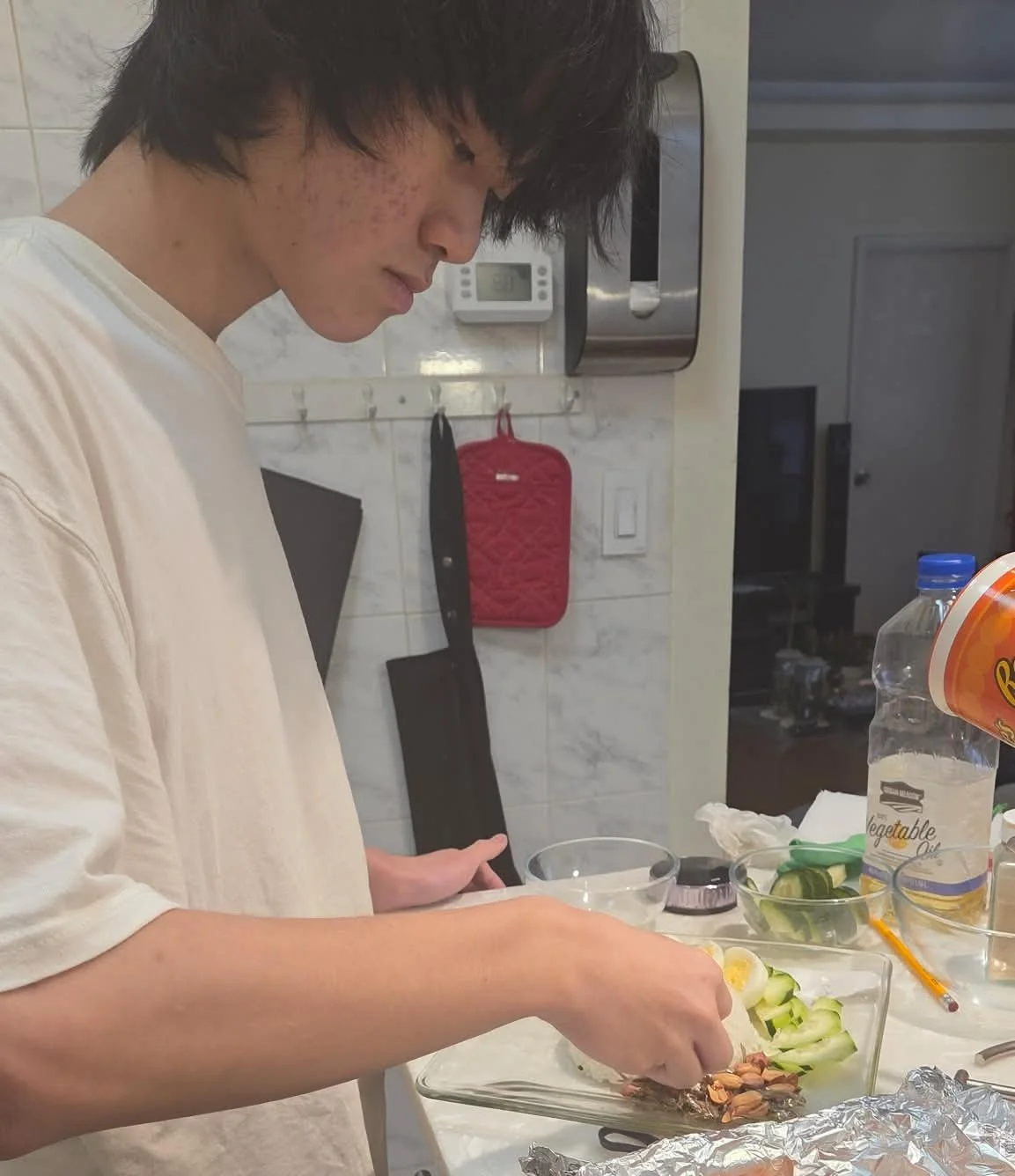
Plating the nasi lemak. Photo: Jeremy Chan
By JEREMY CHAN
I didn’t fully understand how much food could hold memories until I tried making it for the first time. It made me see familiar meals in a completely different way.
Even though I’ve lived in the United States since I was born, Malaysian food has always been a part of my life. Growing up around Malaysian culture meant being surrounded by rich kitchen aromas, early morning breakfasts, and meals that brought everyone together. Out of the foods I grew up eating, nasi lemak has always been a favorite.
Nasi lemak is rice slowly cooked in coconut milk, giving it a creamy texture and a slightly sweet smell. Traditionally, it is wrapped in banana leaves, which gives it a fresh aroma and makes the meal look neat and inviting. It usually comes with hard-boiled eggs, sliced cucumbers, fried anchovies, roasted peanuts, and spicy chili gravy.
I had eaten nasi lemak many times before, some bought from stores and some homemade, but I had never made it myself from start to finish. So I decided I wanted to actually learn how to cook it, not just watch someone else do it.
The first thing I did was prepare the two cups of jasmine rice by washing the rice until it became clear and then adding coconut milk, water, pandan leaves, lemongrass, ginger, and salt. As the rice began cooking, the smell slowly filled the kitchen. The coconut and pandan were the main ingredients creating a slightly sweet whiff of nostalgia.
While the rice was cooking, I started working on the side dishes. I boiled the eggs and set them aside to cool. Then I heated oil and fried the peanuts until they turned a golden brown. After that, I fried the dried anchovies until they became crispy like chips.
Making the spicy chili gravy, also known as sambal, was the hardest part. It’s not that tedious, but a hassle nonetheless. It requires soaked dried red chiles to be blended with shallots, onion, dried anchovies, shrimp paste, and tamarind.
Then the mixture is cooked in oil, giving off a strong and spicy smell, but in a good way. It needs to be maintained and consistently stirred and its heat adjusted so it won’t burn. Without sambal, the entire dish would lack a key taste that makes it unique and flavorful. It’s what gives the dish its signature kick and depth, tying all the ingredients together.
While everything cooked, I sliced cucumbers and started setting up the plating. When everything was finished, I scooped the rice onto a plate and arranged the eggs, cucumbers, peanuts, anchovies, and sambal around it. Seeing the full dish made me feel somewhat proud. Even though it wasn’t perfect, it was what I made.
Making this dish helped me understand how deeply food can be tied to my culture and identity. Even though I didn’t grow up in Malaysia, this dish has always been a part of how my family stays connected to our roots.
Cooking the dish myself made me appreciate how much effort goes into something I used to eat without a second thought. Every step requires patience and attention. It creates a sense of respect for the time and care my family puts into cooking and sharing meals together.
This dish carries a lot of emotional value. It reminds me of precious family time, shared meals, and the warm feeling of comfort that comes from eating something familiar. Even now, making or eating nasi lemak feels like a way to stay connected with my culture.
Even though this isn’t a dish people can easily make whenever they crave it, it’s still a special dish with a balance of flavors that everyone should try at least once. But beyond the taste, it represents tradition and memory. It shows how food can tell stories about where we come from and the people who raised us.
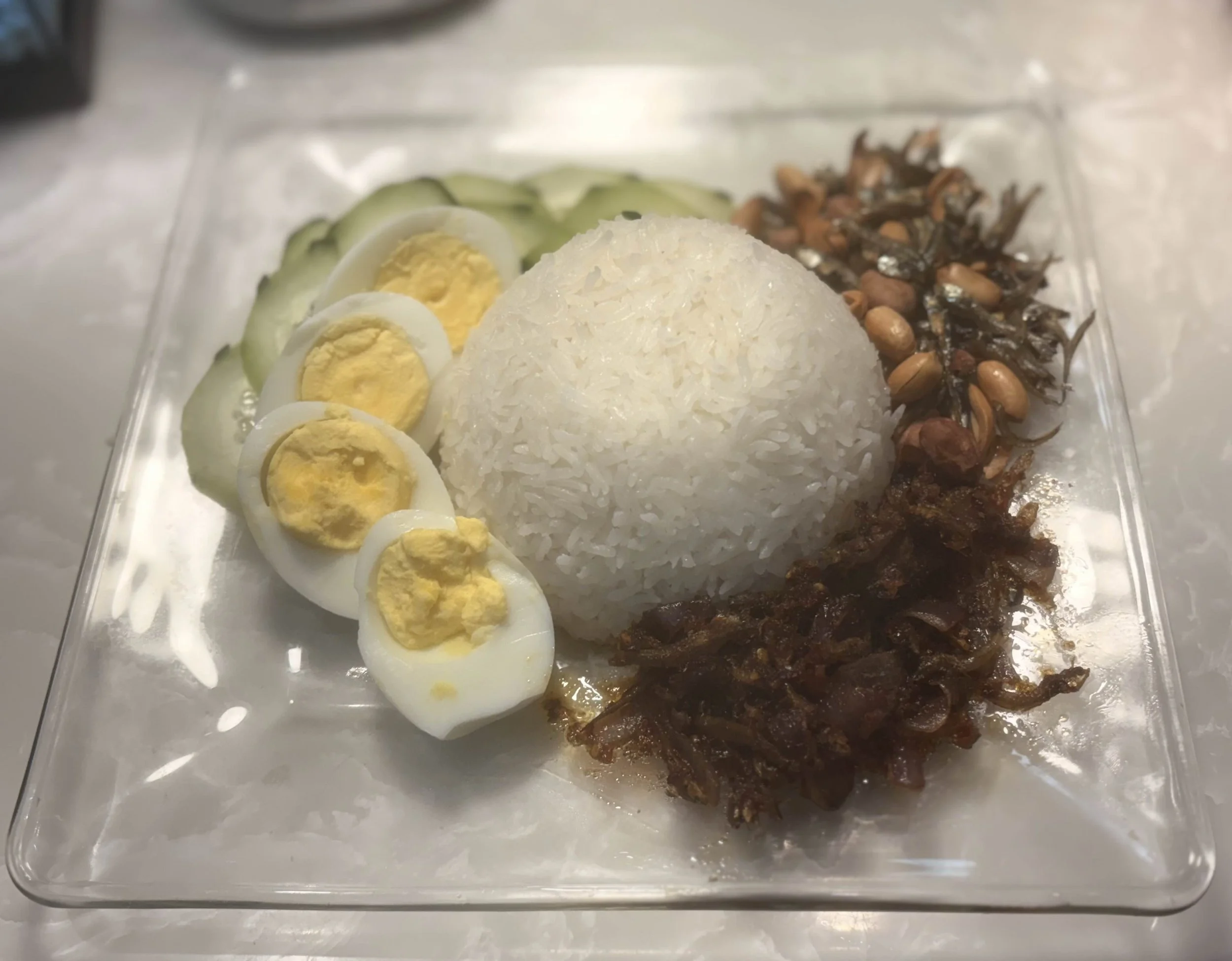
The final product is humble, healthy, and flavorful. Photo: Jeremy Chan