
Bring Back Naptime to Revive Tired Students
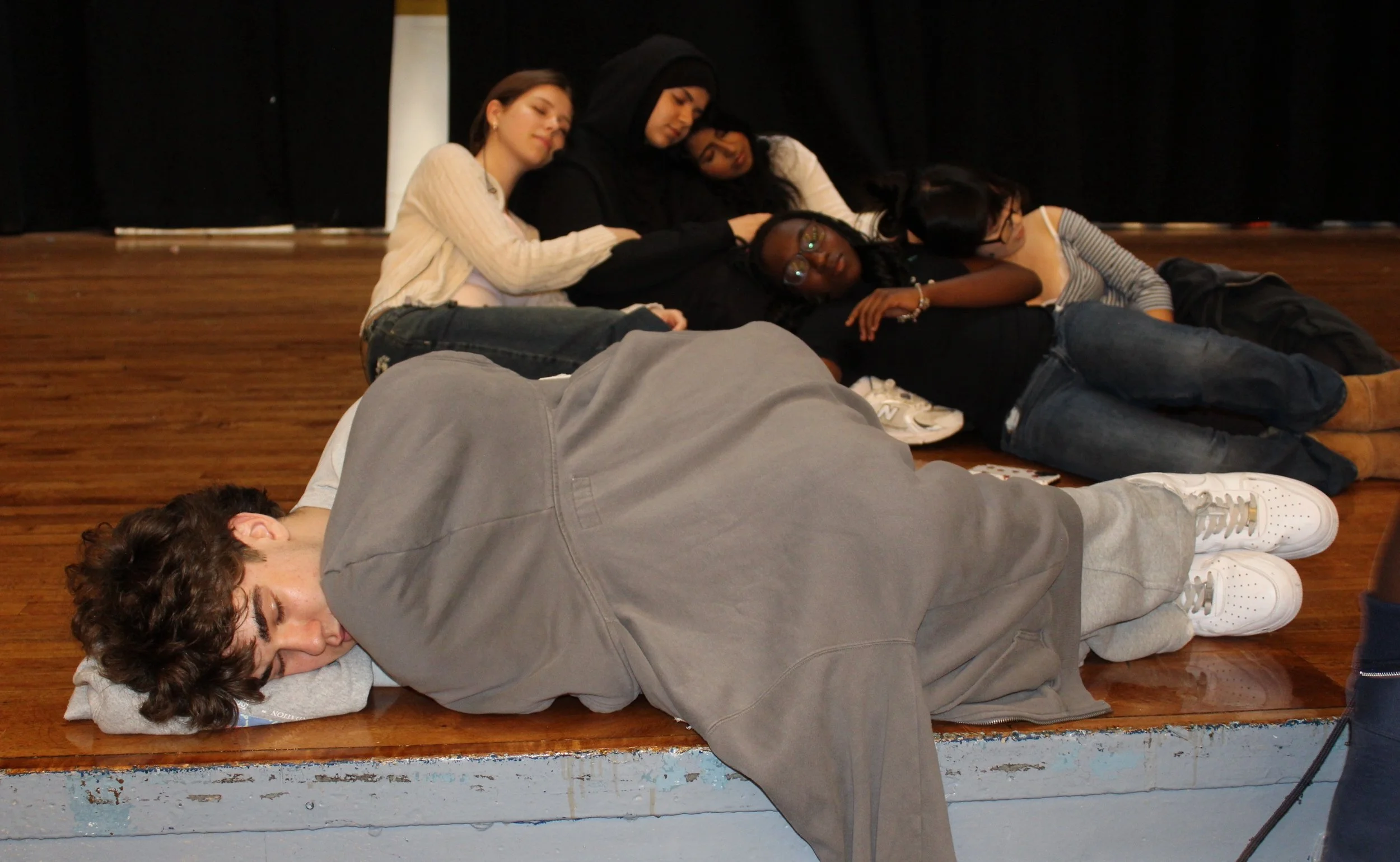
Studies show that high schoolers might benefit even more than preschoolers from a little “lights out” time. Photo: Jayden Courtois
By JAYDEN COURTOIS
Imagine you're in your English class, it's raining outside, and you stayed up until 1 a.m. last night finishing your homework. You want to engage in the class discussion, but you're all comfy in your Essentials sweats, your eyelids feel like ten-pound dumbbells, and you're breathing as if you're already half asleep. For students at Midwood, especially those with a 1-8 schedule, this can be an everyday occurrence.
Dr. Robert Quinlan, the principal, said, "A lot of students with early schedules come in tired, a little sluggish, just not their normal selves."
Nationally, the CDC reports that only 23% of high school students get the recommended amount of sleep on an average school night. There are a lot of reasons why. One of them is trying to fit extracurriculars into an already long day.
"The decision students make when they have practice at 3:30 p.m. until 5:30 means that they'll have to travel home, help their mom and dad with dishes or making dinner, and then do homework," Dr. Quinlan said.
"In English class, there can be days when we spend a lot of the period reading, and if I'm tired I can barely focus on the words," Xiana Badiola ’27 said. "My eyes feel heavy, and at that point my head feels like it's 100 pounds."
JAMA Network conducted a study on students' sleep and its effects on their mental and physical health. They reported that getting five hours or less of sleep led to a significant increase in anxiety, depression, poor academic performance, and a higher risk of obesity and diabetes.
"When I wake up early in the morning, my energy levels are super low, affecting my level of alertness and making me drowsy," Catori Chen ’28 said.
According to an article published in Sleep Science and Practice by Kavya Johri, et al. from the University of Virginia, "The discrepancy in the sleep cycle between weekdays and weekends leads to negative effects on health, mental disorders, and poor scholastic achievement in adolescents." In other words, simply “catching up” on your rest over the weekend is not enough to prevent the harmful effects of sleep deprivation.
Because of Midwood’s overcrowding issue and its roster of extracurriculars, eliminating first period simply isn’t an option. So why not try something outside – or maybe inside – the box?
Two high schools in Las Cruces, New Mexico, have brought in high tech nap pods for their students. The pods feature a reclined chair, a domed sensory-reduction bubble, and a gentle 20 minute timer. There’s plenty of evidence to show such a setup has value.
Sleep specialist Dr. Nitun Verma said, "A short nap for a teenager can give a boost to memory and attention during the day." A 2019 nap study by Liu, et. al at the University of Pennsylvania found that sixth graders who napped 30 to 60 minutes at least three times a week showed a 7.6% increase in academic performance.
In addition, an article published by Duke University students in the National Library of Medicine reported, "Participants who took a nap demonstrated faster speed of processing and greater benefit across testing sessions from practice and were significantly less affected by time-on-task effects."
Japan’s “capsule hotel” industry has models of stackable nap pods, along with some vertical designs as well. So why not bring a few to Midwood?
"I would be so grateful if we had that," Chen said. "I think my grades would increase and I would be more alert during the school day."
"I'd like to see a DOE school pilot the idea, or somewhere maybe in New York State," Dr. Quinlan said. "I don't have a problem jumping into the water and being the first one.”
While there is so much apparent benefit to having nap pods in school, there’s one big reason beyond expense why it would be hard to implement in Midwood: a lack of space. It’s just hard to find a spot to put these things.
So what about a cheap alternative: working some extra “lights out” time into the daily schedule where students can just rest their heads and decompress for 20 minutes?
The problem there is that New York State regulations require a minimum amount of instructional hours per year, and NYC students already spend fewer hours in class than the nationwide average, according to Chalkbeat. With Midwood’s tight ten period schedule, it would be a real challenge to offer every student an extra 20 minutes of downtime during the day.
Space and scheduling may make napping hard to fit at Midwood, but let’s not close the door just yet. Even a single pilot program could really show if students who are running on empty just need a little shut eye to refill their tanks for the rest of the day.